

















HERAKLION, CRETE · 4–5 NOVEMBER 2026

Olympia AI Data
Infrastructure Summit 2026

“Data shapes memory, Knowledge drives intelligence.”

As AI agents evolve from conversational assistants into autonomous systems capable of reasoning, planning, and complex task execution, enterprise AI is entering a new era.

ABOUT THE SUMMIT

Where history and innovation meet

It is our pleasure to invite you to the Olympia AI Data Infrastructure Summit 2026, hosted by FORTH in Heraklion, Crete, on 4–5 November 2026.

The summit will bring together leading researchers, engineers, and industry pioneers from Europe and around the world to exchange insights on agent memory, enterprise ontology, semantic data infrastructure, knowledge engineering, and AI-native application architectures.

We look forward to welcoming you to Crete, where history and innovation meet, to explore the technologies shaping the future of enterprise intelligence.

SUMMIT THEMES

Three key areas of focus

01

Agent Memory Infrastructure

Architectures for long-term memory, contextual reasoning, and continuous knowledge accumulation.

02

Enterprise Ontology

Semantic models that connect enterprise data, business entities, and relationships, providing a trusted foundation for AI understanding and reasoning.

03

The Future of AI Data Infrastructure

The evolution from traditional data management toward intelligent infrastructures that support memory, reasoning, and AI-native services.

SPEAKERS

Leading voices in AI and data

Opening & Welcome Speakers

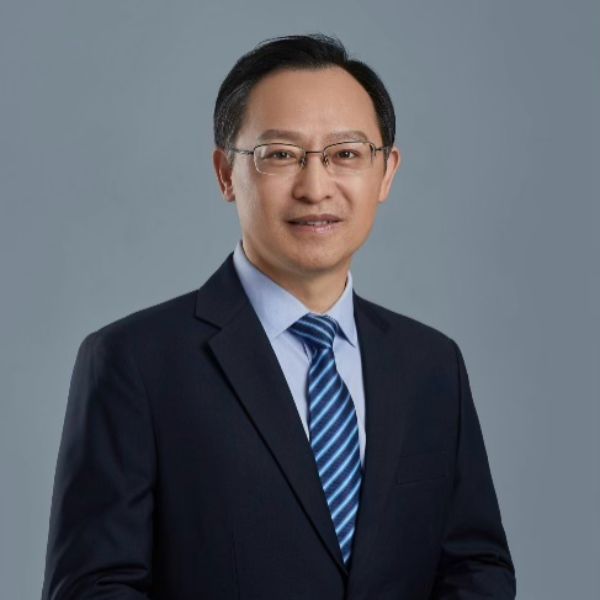
Hong Zhou

Hong Zhou

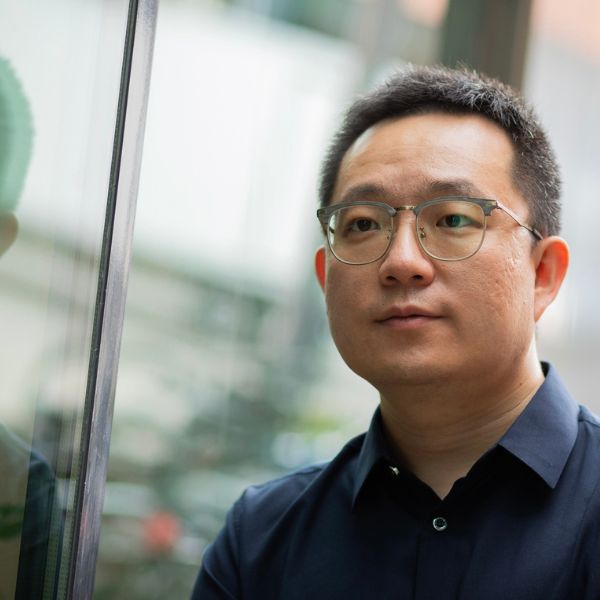
Yannis Tzitzikas

Yannis Tzitzikas

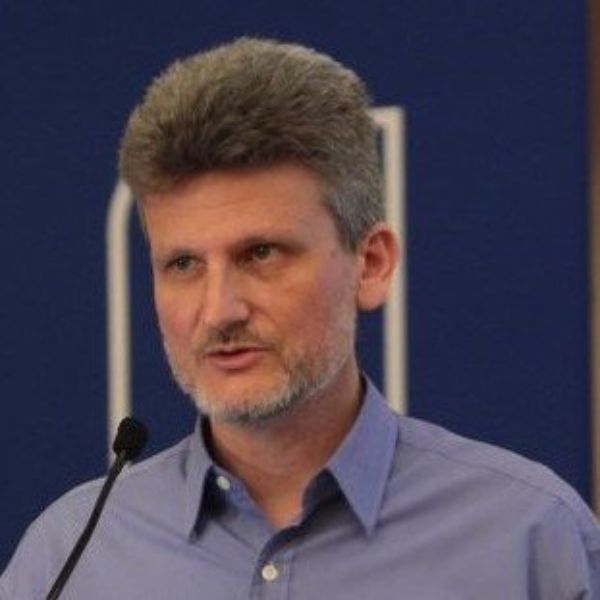
Dimitris Plexousakis

Dimitris Plexousakis

Session & Panel Speakers

Bo Zhao

Bo Zhao

Claudia d'Amato

Claudia d'Amato

Diego Calvanese

Diego Calvanese

Diego Collarana

Diego Collarana

Georgios Chalkiadakis

Georgios Chalkiadakis

George Paliouras

George Paliouras

Grigorios Tsoumakas

Grigorios Tsoumakas

Arijit Khan

Arijit Khan

Nick Bassiliades

Nick Bassiliades

Joseph Sifakis

Joseph Sifakis

Ioannis Pitas

Ioannis Pitas

Jeff Pan

Jeff Pan

Grigorios Tsagkatakis

Grigorios Tsagkatakis

Martin Doerr

Martin Doerr

Kostas Magoutis

Kostas Magoutis

Shang Ling Jui

Shang Ling Jui

Panos Vassiliadis

Panos Vassiliadis

Yannis Ioannidis

Yannis Ioannidis

ABSTRACTS

Exploring the future of AI

Large Language Models (LLMs) continue to advance rapidly, yet their limitations in structured and multi-hop reasoning highlight the need for graph-native AI systems, and for rethinking the AI harness: the scaffolding of retrieval, tools, memory, and orchestration that surrounds a model and largely determines how reliably it performs in practice. In the first part of this talk, I will present our recent progress on knowledge graph-based retrieval-augmented generation (KG-RAG), which serves as a graph-native retrieval layer within the harness and improves LLM robustness across data science tasks such as domain-specific schema matching, entity alignment, and fact verification. In the second part, I will introduce our latest work on agentic LLM systems whose harness is itself graph-structured, spanning graphs of tools, actions, memory, and knowledge, and a new evaluation framework that identifies, measures, and explains where misalignment arises during graph-structured reasoning within the harness.

The growing interaction between neural AI and explicit semantic knowledge is creating new opportunities for building more structured, explainable, and trustworthy AI systems. This talk presents recent work of our research laboratory (ISL@AUTh) exploring this interaction across ontology engineering, semantic alignment, and knowledge graph completion.

We first examine how Large Language Models can support ontology drafting from natural-language requirements, while symbolic validation and reasoning provide feedback to control and refine the generated knowledge. We then consider ontology matching, where language models capture contextual similarity between concepts and abductive reasoning provides semantic explanations for the resulting alignments. In the opposite direction, we show how ontological knowledge, including type information and domain/range constraints, can be incorporated into neural knowledge graph completion, both during learning and through inference-time semantic control of ranked predictions.

Together, these studies illustrate complementary ways in which neural models can help construct and align semantic knowledge, while ontologies and symbolic reasoning can guide, validate, explain, and control neural predictions. We conclude with lessons and open challenges for neuro-symbolic semantic infrastructures supporting intelligent data analytics.

Adaptive exploration methods propose ways to learn complex policies via alternating between exploration and exploitation. An important question for such methods is to determine the appropriate moment to switch between exploration and exploitation and vice versa. This is critical in domains that require the learning of long and complex sequences of actions. In this work, we present a generic framework for [safe] adaptive exploration, that employs uncertainty to address this important issue in a principled manner. Our framework includes previous adaptive exploration approaches as special cases. Moreover, it can incorporate any uncertainty-measuring mechanism of choice, for instance mechanisms used in intrinsic motivation or epistemic uncertainty-based exploration methods. We experimentally demonstrate that our framework gives rise to adaptive exploration strategies that outperform standard ones across several environments.

Parts of this work has appeared in the Proceedings of AAMAS-2026 - the 25th International Conference on Autonomous Agents and Multiagent Systems.

Knowledge Graphs (KGs) are currently exploited in a multitude of domains and research fields, despite they suffer of incompleteness and noise, being the result of a complex building process. Hence, significant research efforts are currently devoted to improve the coverage and quality of existing KGs, particularly focussing on the link prediction task. For this purpose, mostly Knowledge Graph Embedding (KGE) models are adopted as they proved to scale on very large KGs. They are data-driven and numeric based Machine Learning (ML) solutions which learn vector representations of KGs, usually on the ground of the graph structure. They generally consist of series of numbers without any obvious human interpretation, thus possibly affecting the interpretability, the explainability and sometimes the trustworthiness of the results. Nevertheless, KGs may rely on expressive representation languages, e.g. RDFS and OWL (ultimately grounded on Description Logics), that are also endowed with deductive reasoning capabilities, but both expressiveness and reasoning are most of the time disregarded by the majority of KGE methods that have been developed so far. A similar issue applies when trying to explain link predictions on KGs. Even more so, benchmark datasets for KGE models typically contain only ground facts, discarding the schema available in the source KG. In this talk, the role and the value added that the semantics may have for developing neural-Symbolic methods leveraging expressive schemas and to be used for computing semantic-aware link prediction and explanation solutions will be argued. Additionally, the limits in the evaluation of existing neural-symbolic link prediction solutions will be addressed. Hence, research directions on benchmarking neural-symbolic methods and on empowering link prediction and explanation solutions by injecting background knowledge will be presented. Afterwards, the urgent problem of evaluating explanations for link prediction results will be analyzed and a unified protocol for evaluating link prediction explanations will be presented.

This lecture overviews decentralized and distributed Deep Neural Network (DNN) architectures and their implementation in cloud/edge environments. Decentralized DNN agents that can learn from each other will form the core of an emerging AI market by exchanging data, DNN features and DNN decisions for DNN training and DNN inference. Big data analysis can be greatly facilitated if decentralized/distributed DNN architectures are employed that interact with each other for DNN training and/or inference using the human Teacher-Student education paradigm. A novel Learning-by-Education Node Community (LENC) framework is presented that facilitates communication and knowledge exchange among diverse Deep Neural Networks (DNN) agents, undertaking the role of a student or teacher DNN by offering or absorbing knowledge respectively. The framework enables efficient and effective knowledge transfer among participating DNN agents while enhancing their learning capabilities and fostering their collaboration among diverse networks. The proposed framework addresses the challenges of handling diverse training data distributions and the limitations of individual DNN agent learning abilities. The LENC framework ensures the exploitation of the best available teacher knowledge upon learning a new task and protects the DNN agents from catastrophic forgetting. The experiments demonstrate the LENC framework functionalities on multiple teacher-student learning techniques and their integration with lifelong learning. Our experiments manifest the LEMC framework’s ability to maximize the accuracy of all participating DNN agents in classification tasks by leveraging the collaborative knowledge of the framework. A LENC framework implementation in cloud/edge environments is also overviewed. Applications are presented in big visual data analysis tasks for Natural Disaster Management.

Agentic AI is now the heartbeat of Industry. However, a recurring gap is that most solutions today focus on the agent's "reasoning" without grounding its knowledge. Knowledge Graphs (KGs) address this gap by providing a true world model with semantics, stable identifiers, provenance, constraints, and governance. KGs ground the "logic" in reality, making agents significantly more reliable and trustworthy. In this presentation, we show how to integrate KGs with LLM-based agents and the benefits they bring for memory management, planning, traceability, and explainability. However, KGs do not automatically provide true or unbiased knowledge. Governance and quality in KGs are critical and expensive to maintain; we also discuss how agents can help by shifting from manual pipelines to an interactive, continuous knowledge lifecycle.

Most biomedical knowledge lies in unstructured text, such as scientific articles, and extracting useful information at scale is a central challenge for biomedical AI. For more than a decade, the BioASQ challenge has driven progress on this problem through shared tasks, benchmark datasets, a standardized evaluation framework, and a discussion forum in the domain. It began with the central tasks of assigning MeSH concepts to articles (semantic indexing) and question answering, which involves the retrieval of relevant documents, snippets, and ontology concepts, and extracting answers from them. Since then, BioASQ expanded, offering a range of information extraction tasks that cover different types of clinical documents, medical specialties, and languages. Overall, BioASQ has welcomed more than 180 teams from 41 countries, steadily pushing the state of the art in biomedical semantic indexing, question answering, and information extraction forward. A high point of this progress was the successful completion of the MeSH indexing task when the US National Library of Medicine transitioned to a fully automated indexing process. This talk will present the resources and evaluation methodology BioASQ has built, what the results reveal about the high performance of LLM-based systems, and the important challenges that remain open.

The evolution from traditional data management toward intelligent infrastructures requires a diverse ecosystem of capabilities, ranging from processing raw text to supporting memory, reasoning, and AI-native services. Designed to foster dialogue and future collaborations, this presentation provides a panoramic overview of our recent research initiatives and industrial deployments across the AI data lifecycle. Anchored in the domain of semantic extraction from unstructured data, the first segment of the talk highlights our recent research on utilizing small, efficient models for relation extraction. Alongside this core research, I will present two major national projects applying NLP to complex domains: HARNESS, which focuses on advanced text summarization, and E2ECardioAI, a newly launched national project dedicated to automated clinical coding in Cardiology. Moving from extraction to enterprise data access and generation, the presentation will showcase custom Retrieval-Augmented Generation (RAG) architectures deployed with industry partners. In parallel, I will outline our specialized commercial expertise in synthetic data generation for relational databases, a critical enabler for privacy-preserving model training and testing. Finally, the talk explores the mechanisms required to keep these intelligent infrastructures adaptive and autonomous. I will introduce our work on the newly launched EU Horizon Project CEREBRA-AI, where we lead the work package on continual learning. To close, I will present our role in the newly launched EU Horizon FUTURE project, which synthesizes multiple AI capabilities into a practical data science agent designed to automate the analysis of complex wind tunnel testing data.

SCHEDULE

A programme built around ideas and dialogue

Explore the Olympia AI Data Infrastructure Summit 2026 programme and discover the sessions, speakers and discussions.

SUMMIT INFO

Conference Information

Dates 4–5 November 2026
Venue Megaron Hotel, Heraklion, Crete, Greece
Host / Scientific organisation FORTH
Conference Chair Yannis Tzitzikas
Conference themes: Enterprise Ontology · Agent Long-Term Memory and State Management · AI Data Infrastructure and Trustworthy Execution
Welcome Reception: Tuesday, 3 November 2026 · 5th Floor Bar, Megaron Hotel
DAY 01

Wednesday, 4 November 2026

Trustworthy Agents, Knowledge Foundations and Semantic Systems

08:50 – 09:20

Registration and Networking

09:20 – 09:30

Welcome Address | Introduction and Conference Information

Speaker: Yannis Tzitzikas

Professor, University of Crete, Greece; Head of the Cultural Informatics Centre at FORTH; Vice-Chair of the Computer Science Department; Summit Chair

Opening overview: Introduces the Olympia conference series, the summit themes and arrangements, then leads into the FORTH-ICS welcome, Huawei opening address and academic programme.

09:30 – 09:40

Welcome from FORTH-ICS

Speaker: Dimitris Plexousakis

Professor of Computer Science, University of Crete, Greece; Director of FORTH-ICS (2017–2025); currently Deputy Director of FORTH-ICS; former Vice Chair of the FORTH Board

Opening overview: Welcomes participants on behalf of FORTH-ICS and introduces its strengths and collaboration experience in ontologies, knowledge representation, semantic data management and information systems.

09:40 – 10:10

Huawei Opening Address

Speaker: Hong Zhou

President, Huawei European Research Institute

Opening overview: Outlines emerging data-infrastructure requirements for enterprise AI, including unified semantic knowledge, persistent agent memory, trustworthy data access and scalable system capabilities, and identifies areas where research can address industrial challenges.

10:10 – 10:50
KEYNOTE 01

Trustworthy Autonomous Agents

Speaker: Joseph Sifakis (online)

Founder of Verimag, France; 2007 ACM A. M. Turing Award laureate; member of the French Academy of Sciences; former Professor, EPFL, Switzerland

Talk overview: Autonomous agents must perceive, decide and act in open environments. Conventional model-based methods cannot capture all their complexity, while end-to-end learning alone offers limited assurance. The topic examines hybrid designs that combine formal methods and learning, runtime safeguards, system verification and trade-offs between reliability and performance.

10:50 – 11:10

Coffee Break

SESSION 01

Foundations of Knowledge and Agentic AI

Chair: Nikos Ntarmos

Speakers: Jeff Z. Pan · Martin Doerr · Bo Zhao

Session overview: As AI moves from isolated model capabilities to extended task execution, the session explores reusable skills, temporal and event-centred knowledge modelling, and reliable persistence and management of execution state.

11:10 – 11:40

From Parameter Scaling to Agent Scaling

Speaker: Jeff Z. Pan

Director of Retrieval and Agent Intelligence Lab, Huawei

Talk overview: Examines how advances in AI can move beyond simply increasing model size toward sustained performance on long-running agent tasks. The talk connects long-context management, persistent memory, reusable skills and agent runtimes, exploring how task state can be retained and reused across interactions and how scalable agent coordination can be supported.

11:40 – 12:00

Representing Knowledge of the Past

Speaker: Martin Doerr

Honorary Researcher, FORTH, Greece; principal architect and advocate of CIDOC CRM

Talk overview: Knowledge of the past encompasses more than static facts: it includes events, their timing, participants, evidence and relationships among different accounts. Drawing on event-centred ontology approaches such as CIDOC CRM, the talk considers interpretable, traceable and interoperable representations of historical knowledge, offering temporal and provenance semantics for long-term agent memory.

12:00 – 12:30

State Management for Agentic AI Systems

Speaker: Bo Zhao

Aalto University, Finland; VLDB 2025 Distinguished Reviewer; former AWS Redshift engineer

Talk overview: Long-running agents need to retain execution state, resume interrupted tasks and avoid duplicated work or inconsistent states. The session considers how data-intensive systems organise and update state, share intermediate results and balance concurrent access, latency, memory use and persistence costs.

12:30 – 14:00

Group Photo and Lunch

SESSION 02

Semantic Knowledge Engineering for AI Agents

Chair: Jeff Z. Pan

Speakers: Diego Collarana · Nikolaos Bassiliades · Claudia d'Amato

Session overview: How can enterprise agents work from reliable knowledge? Topics range from grounding agents in enterprise facts to ontology alignment, knowledge-graph completion, evaluation and explainability in neuro-symbolic reasoning.

14:00 – 14:30

Grounding AI Agents in Enterprise Knowledge

Speaker: Diego Collarana

Research team leader, Fraunhofer FIT, Germany; recipient of the 2020 Google AI Scholar Award

Talk overview: Enterprise knowledge is spread across documents, databases and business applications. Text-similarity retrieval alone often loses entity relationships and business constraints. The talk explores how knowledge graphs and semantic structures can ground agent responses, reasoning and tool use in traceable enterprise facts, improving reliability.

14:30 – 15:00

Connecting Language Models and Semantic Knowledge

Speaker: Nikolaos Bassiliades

Professor, Aristotle University of Thessaloniki, Greece; ACM and IEEE Senior Member; member of the RuleML organisation board

Talk overview: Language models can assist with extracting concepts and relations, but automatically generated ontologies may still contain ambiguities and logical contradictions. The talk explores combining language models with rule reasoning for ontology construction, cross-ontology alignment and knowledge-graph completion, with attention to knowledge quality, semantic consistency and the cost of manual modelling.

15:00 – 15:30

Neuro-Symbolic Link Prediction for Refining Knowledge Graphs

Speaker: Claudia d'Amato

University of Bari, Italy; ISWC 2022 General Chair and ISWC 2017 Program Chair

Talk overview: Knowledge graphs often contain incomplete relationships, while purely statistical link prediction can add relations that are difficult to validate. The talk combines neural methods with symbolic semantic constraints to examine link-prediction and graph-refinement approaches, benchmarks and explanations, toward more trustworthy knowledge updates.

15:30 – 15:50

Coffee Break

SESSION 03

From Semantic Extraction to Agentic Systems

Chair: Claudia d'Amato

Speakers: Arijit Khan · Grigorios Tsagkatakis · Georgios Paliouras

Session overview: Building from graph data and agent runtime architectures, this session explores semantic access, extraction and evaluation in large-scale spatial and remote-sensing applications and biomedical literature.

15:50 – 16:20

Graph-Native LLMs and Agentic Systems

Speaker: Arijit Khan

Bowling Green State University, United States; ACM Distinguished Speaker; SIGMOD 2026 Distinguished Reviewer; previously at Aalborg University and Nanyang Technological University

Talk overview: LLMs have limitations in structured, multi-hop reasoning. Graph-native approaches can represent knowledge, tools, actions and memory as connected structures. The talk introduces KG-RAG for pattern matching, entity alignment and fact checking, and discusses graph-structured agent harnesses and the evaluation of reasoning errors.

16:20 – 16:50

Agentic Frameworks for Space Data Management

Speaker: Grigorios Tsagkatakis

University of Crete and FORTH, Greece; research in Earth observation and ESA-related remote-sensing projects

Talk overview: Spatial and remote-sensing applications involve substantial data volumes, large spatial and temporal coverage and heterogeneous sources. This talk uses the domain to explore semantic data access by agents, retention of task context and memory, and the scaling of large data processing into operational services, including throughput, latency and cost constraints.

16:50 – 17:10

BioASQ: Semantic Extraction and Evaluation

Speaker: Georgios Paliouras

Acting Director, Institute of Informatics and Telecommunications, NCSR Demokritos, Greece; Head of the SKEL AI Laboratory

Talk overview: BioASQ develops semantic indexing, knowledge-extraction and question-answering evaluation tasks over large biomedical literature collections, offering comparable benchmarks for different methods. The talk covers data resources, task design and evaluation, illustrating a path from unstructured specialist publications to searchable knowledge and evidence-grounded answers.

17:10 – 17:20

Day 1 Recap and Closing

Speaker: Yannis Tzitzikas
18:45 – 21:15

Conference Dinner

Petousis Taverna, Heraklion

DAY 02

Thursday, 5 November 2026

Data Infrastructure, Structural Intelligence and Product Capabilities

08:45 – 09:00

Networking

09:00 – 09:40
KEYNOTE 02

Knowledge Graphs from an Industrial Perspective

Speaker: Diego Calvanese

Professor, Free University of Bozen-Bolzano, Italy; ACM Fellow and EurAI Fellow; initiator of Ontop and co-founder of Ontopic

Talk overview: Industrial adoption of knowledge graphs must solve more than logical inference: enterprises face distributed data, synchronisation and maintenance issues, and compatibility with existing systems. With ontology-based data access (OBDA) as a key reference, the talk explores using a shared conceptual layer to access heterogeneous data sources, while balancing semantic consistency, query efficiency and maintenance costs.

09:40 – 10:20
KEYNOTE 03

The Future of Data Infrastructure in the Agentic AI Era

Speaker: Yannis Ioannidis

Professor of Computer Science, National and Kapodistrian University of Athens, Greece; ACM and IEEE Fellow; ACM President (2022–2026); former President of Athena Research Center

Talk overview: Examines how data infrastructure may evolve as agents become prominent users of data systems. The topic addresses database queries, governance, data integration and interfaces for intelligent systems, with particular attention to how agent-driven access and execution may reshape data infrastructure.

10:20 – 10:40

Group Photo and Coffee Break

SESSION 04

Adaptive and Decentralised Intelligence

Chair: Theodore Patkos

Speakers: Panos Vassiliadis · Ioannis Pitas · Georgios Chalkiadakis

Session overview: Beginning with intention-driven analytics and automated insights, the session covers decentralised machine learning and safe exploration and experience accumulation by agents under uncertainty.

10:40 – 11:10

From Analytic Intentions to Data Insights

Speaker: Panos Vassiliadis

Professor, University of Ioannina, Greece; Chair of the DOLAP Steering Committee

Talk overview: Rather than writing complex SQL, users can express an analytic intention such as describing a situation, explaining an anomaly or forecasting a trend. The system maps intentions to database queries and analysis tasks, identifies relevant highlights and organises them into charts and narratives. Technical aspects include intention operators, multi-query optimisation, result caching and automated insight presentation; this is not a database-storage-layer talk.

11:10 – 11:40

Decentralized Machine Learning

Speaker: Ioannis Pitas

Former Professor of Computer Science (1994–2025), Aristotle University of Thessaloniki, Greece; now Senior Researcher; IEEE Fellow and EURASIP Fellow

Talk overview: Data held by different devices or organisations cannot always be pooled centrally. Decentralised learning trains models and shares knowledge through cooperation between nodes. The talk considers communication costs, heterogeneous participants, model coordination and scalability, with its main relevance in distributed ML infrastructure rather than agent long-term memory itself.

11:40 – 12:10

From Data Infrastructure to Structural Intelligence: Learn, Preserve, Verify and Interpret for Trustworthy AI Agents

Speaker: Shang-Ling Jui

Industrial AI expert; former President, SAP China Research Institute; former Chief AI Scientist, Huawei Consumer Business

Talk overview: How can probabilistic AI operate within the structural constraints required by scientific and engineering systems? This talk presents Learn, Preserve, Verify and Interpret (LPVI) as a framework for separating learned generation, constraint preservation, explicit verification and interpretation. Using AI-guided chip design as a running example, it examines admissible state spaces, property preservation across representations, compositional contracts and versioned verification evidence. Ontologies and knowledge graphs provide explicit semantic structure, while agent memory retains state, provenance and evidence tied to specific versions. The talk distinguishes established mathematical principles from proposed architectural mechanisms and open research questions.

Technical relevance: Structural Intelligence · Enterprise Ontology · Agent Memory · Constraint Preservation · Verifiable Reasoning

12:10 – 13:30

Lunch

SESSION 05

Operational AI and Structural Intelligence

Chair: Giorgos Flouris

Speakers: Grigoris Tsoumakas · Kostas Magoutis · Shang-Ling Jui

Session overview: Focusing on real enterprise systems, the session considers architectures from semantic extraction to autonomous agents, scaling AI services, and combining ontologies, long-term memory and verifiable reasoning into structural intelligence, followed by a panel on product capabilities.

13:30 – 14:00

From Semantic Extraction to Autonomous Agents

Speaker: Grigoris Tsoumakas

Professor of Machine Learning, Aristotle University of Thessaloniki, Greece; ECML PKDD Test-of-Time Award recipient; co-founder of Medoid AI

Talk overview: Extracting entities and relations from corporate documents is only a first step. Autonomous enterprise agents must integrate knowledge with planning, tool calls and business execution. The talk addresses the architectural transition from semantic extraction to enterprise agents and how structured knowledge can become practical business intelligence.

14:00 – 14:30

Autoscaling of AI Services

Speaker: Kostas Magoutis

Professor and Head of the Department of Computer Science, University of Crete, Greece; PhD, Harvard University; formerly at IBM T. J. Watson Research Center

Talk overview: AI service loads vary rapidly, with diverse resource needs; fixed provisioning risks queues and excess computing costs. The talk addresses workload monitoring, autoscaling and resource scheduling, with the aim of balancing latency, throughput, utilisation and operating cost dynamically.

14:30 – 15:00

Uncertainty-Driven Adaptive Exploration

Speaker: Georgios Chalkiadakis

Professor, Technical University of Crete, Greece; former President of the European Association for Multi-Agent Systems (EURAMAS)

Talk overview: Autonomous agents must balance experimenting with new behaviour against reusing existing policies in unfamiliar environments, where uncertainty heightens the risk of mistakes. The talk addresses safe adaptive exploration and experience-feedback mechanisms, considering how agents can keep learning under safety constraints and how this can support reliable multi-agent decisions.

15:00 – 15:20

Coffee Break

PANEL DISCUSSION

Ontology and Agent Memory: Turning Research into Product Capabilities

Moderator: Yannis Tzitzikas

15:20 – 16:50

Ontology and Agent Memory — Turning Research into Product Capabilities

Panelists: Yannis Ioannidis · Diego Calvanese · Dimitris Plexousakis · Arijit Khan · Claudia d'Amato

Panel focus: Defining the responsibilities of enterprise ontologies and agent memory, their ongoing evolution and business value, and consistency and access control in shared knowledge systems.

Panel overview: The discussion addresses responsibilities of enterprise ontologies and agent memory, quality and value assessment, knowledge evolution and governance of shared memory, including enterprise data access, cross-agent sharing, permission isolation and productisation costs.

16:50 – 17:10

Summit recap and closing (including points for a draft joint statement)

Speaker: Yannis Tzitzikas

Including points for a draft joint statement

Location

A historic setting for future ideas

The Olympia AI Data Infrastructure Summit 2026 will take place at the facilities of the Megaron Hotel, in Heraklion, Crete.

9, D. Beaufort, 71202,Heraklion, Crete, Greece

Contact us

Get in Touch

Address

31, Agias Varvaras Street,
16452 Argyroupoli

Scientific Organization

Yannis Tzitzikas
FORTH-ICS and University of Crete

www.ics.forth.gr/~tzitzik
Registration Coordinator

Lida Harami
FORTH-ICS